Car Diagnostics on the Gold Coast
We bring workshop-level car care to your driveway across the Gold Coast, offering mobile servicing, repairs and inspections backed by decades of hands-on mechanical experience.
Nature's Symphony
Request a call back
Thank you for contacting Calvin's Mobile Mechanics.
We will get back to you as soon as possible.
Oops, there was an error sending your message.
Please try again later.
Car Diagnostics That Catch Issues Early
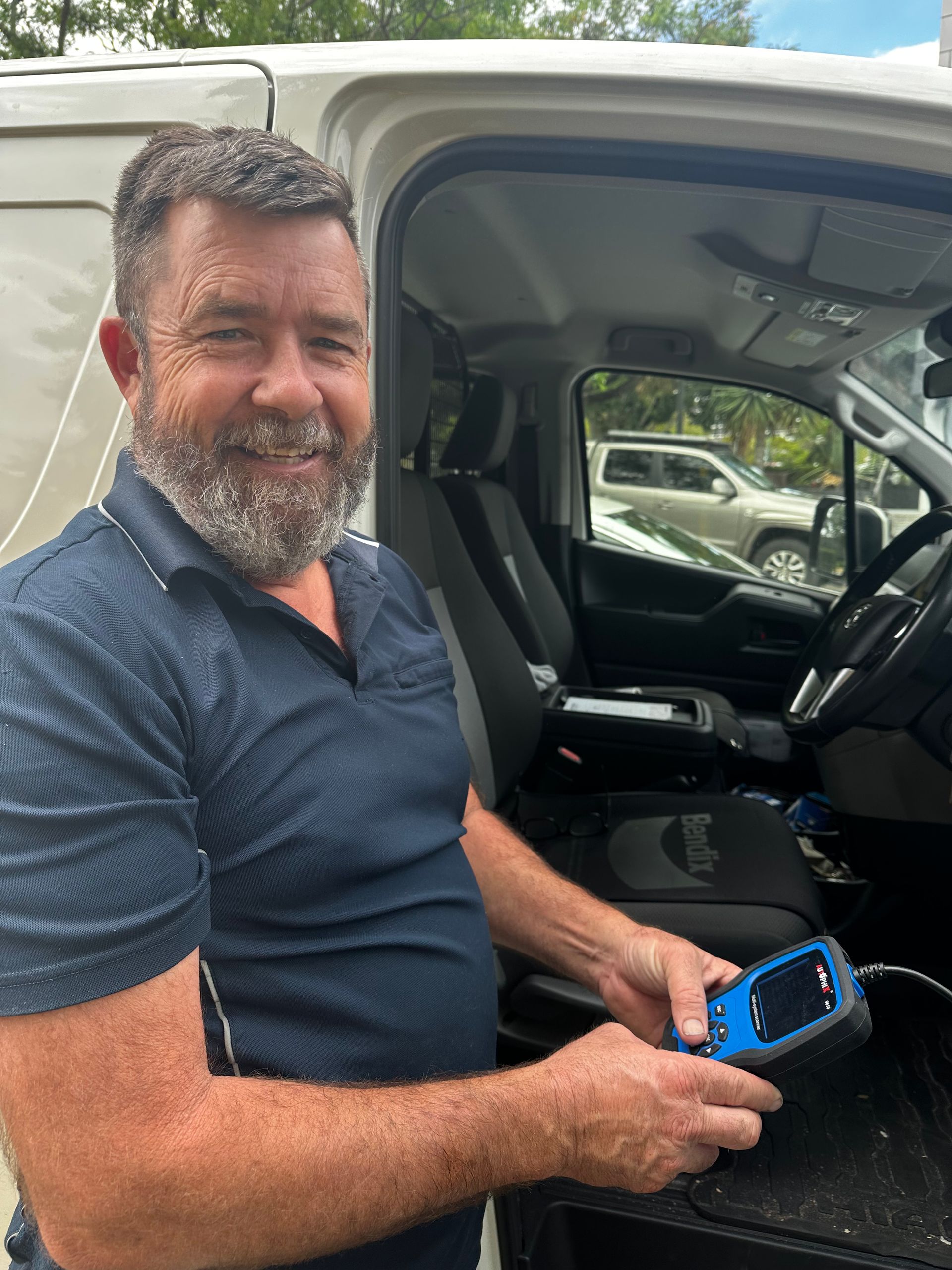
You don’t need a workshop visit to find out why your engine light is on or your car isn’t running as it should. Calvin’s Mobile Mechanics provides mobile car diagnostics on the Gold Coast, bringing scanning equipment and practical mechanical experience to your home or workplace.
We combine electronic scans with hands-on testing to investigate warning lights, unusual noises and changes in performance. You’ll speak directly with the mechanic checking your car, get a clear explanation of the findings and have the chance to discuss what happens next.
Call 0488 726 837 to arrange a diagnostic check, logbook service or have your brakes serviced at a location that suits you.
Diagnostic equipment and hands-on testing that comes to you
Experienced fault finding with clear, personal advice
Finding the Cause Behind the Symptoms
A fault code points us towards a problem, but further testing helps establish what’s causing it. At Calvin’s Mobile Mechanics, we combine scan results with physical checks and information about when symptoms occur. Depending on the fault, our investigation covers:
- Reading stored, pending and historical fault codes
- Reviewing live sensor readings for values outside expected ranges
- Checking wiring, electrical connections and related circuits
- Using freeze-frame data to investigate intermittent faults
- Tracing unusual noises and changes in engine performance
- Checking aftermarket accessories for interference with vehicle systems
- Testing related components before recommending replacement parts
FAQ
Why do some fault codes return even after a reset?
A returning code usually means the underlying issue hasn’t been resolved. Resetting clears the stored information but doesn’t fix the cause, so the system flags it again once the problem reappears. Sensors may be reading out-of-range values, wiring might be loose or a component could be failing intermittently.
Temperature changes, vibration and load can also trigger the code at different times. Proper diagnostics involve checking live data, testing circuits and confirming that all related systems behave as expected under normal driving conditions before attempting another reset.
Can a failing sensor affect multiple systems at once?
Yes, many modern vehicles rely on shared sensor data across different systems. A single failing sensor can influence engine timing, fuelling, traction control, transmission behaviour or even climate control performance. For example, a faulty airflow sensor may lead to rough running while also triggering stability or emissions-related warnings.
Car diagnostics clarify these interactions by reviewing live readings and identifying which values sit outside expected ranges. This prevents misdiagnosis and helps technicians target the actual fault rather than chasing symptoms.
Do aftermarket accessories impact diagnostic results?
Aftermarket accessories such as LED lighting upgrades, stereos, towing modules or security systems can affect diagnostic readings if they share circuits with factory systems. They may introduce electrical noise, alter resistance or disrupt communication between modules.
When diagnosing a fault, technicians often inspect recent installations, check for non-factory splicing and verify that all accessories draw current within safe limits. Accounting for these additions helps avoid false conclusions and ensures both factory systems and accessories operate correctly.
Why do intermittent faults require more detailed diagnostics?
Intermittent faults can be challenging because they don’t occur consistently. A vehicle may operate normally during inspection yet develop issues under certain temperatures, speeds or load conditions.
In these cases, diagnostics involve reviewing stored data, analysing freeze-frame information and testing related systems methodically.
Electrical faults, loose connections or failing sensors often fall into this category. A thorough approach helps avoid replacing parts unnecessarily. Identifying the pattern behind the fault is key to resolving the issue rather than temporarily masking the symptoms.
Can a diagnostic test find problems even if no warning lights are on?
Yes, in many cases it can. Vehicles often store pending or historical fault codes before a dashboard warning light becomes visible. Diagnostic equipment can also access live data streams, showing how sensors and components are performing in real time.
This can help identify irregular readings, intermittent faults or early-stage issues that haven’t yet triggered an alert. For drivers noticing reduced fuel efficiency, rough idling or hesitation, a diagnostic check may uncover subtle problems that are not immediately obvious.